
Hospitality Employee Dedication
by Sheldon | Sep 29, 2026
Hospitality employee dedication isn't measured by hours worked. Learn how to recognize, develop, and appreciate the people who genuinely care about their work.

Leadership
by Sheldon | Sep 17, 2026 | 4 min read
I'm seeing articles and posts everywhere about team culture and restaurant culture fit. It's the "chic" topic right now, and wow, does it resonate with my recruiting experience.
I used to get plenty of eye rolls when I asked restaurant clients to describe their culture before starting a search. I still get a few. But some of their answers have led me to qualified candidates who might otherwise have been overlooked.
Restaurant culture fit is easier to recognize than describe. It isn't a mission statement or a promise of an upbeat work environment. It shows up in how people communicate, handle pressure, and work together during service.
Experience tells me whether someone can do the job. Understanding the restaurant's culture helps me consider whether they might thrive there.
Please hear me out. I'm going to tell you why culture matters.
A while back, a good client told me during our first meeting that his BOH listened to heavy metal while prepping for dinner service.
It seemed like a minor detail, but it stayed with me as I reviewed applicants.
And guess what?
I found a qualified Line Cook who also managed a heavy metal band outside work.
His connection to music didn't qualify him for the job. His restaurant experience did. But the shared interest suggested he might connect with the team, so I looked more closely.
Another client told me that nearly everyone in the FOH was an art or dance student or had a strong interest in both.
As I reviewed qualified applicants, their interests in art, dance, and other creative pursuits gave me additional context.
Those interests weren't job requirements. Experience, reliability, professionalism, and availability still mattered.
But shared interests can give coworkers common ground, make pre-shift more entertaining, and help relationships develop naturally.
They're clues about where someone might feel at home.
Employee referrals can be worth their weight in gold.
Employees know what it's like to work in their restaurant. They understand the personalities, pace, expectations, sense of humor, and what happens when service gets difficult.
They also know the person they're referring.
That doesn't mean every friend is qualified or every referral is a good hire. But when an employee recommends someone they'd genuinely want beside them during a busy shift, I pay attention.
They may recognize something about that person's ability to work with the team that a resume can't communicate.
Culture isn't limited to music, art, or shared interests.
How does the kitchen communicate when tickets start stacking up? What happens when someone makes a mistake? Do experienced employees help newer ones, or are they expected to figure everything out?
Does the manager remain steady during a difficult service, or add more tension to the room?
These everyday experiences shape what working in a restaurant feels like.
Two restaurants can offer similar compensation, schedules, and responsibilities while providing very different working environments.
That's why culture matters to restaurant hiring and retention.
And it doesn't mean everyone needs the same personality.
Strong teams can include very different people who respect one another, communicate well, and understand how to work together.
Managers establish expectations and provide direction, but employees bring the culture to life through their daily interactions.
I've explored that relationship further in Effective Restaurant Leadership Builds Trust.
Research offers another perspective. In its 2026 study of more than 1,000 frontline restaurant workers, 7shifts examined the importance of coworkers and manager relationships in the employee experience.
Restaurant culture fit isn't about hiring people who are all alike. It's about understanding the working environment and considering whether a qualified candidate can contribute positively to it.
Skills, experience, reliability, and professionalism matter. So do communication, attitude, and the ability to work with others.
Some qualities become apparent during interviews. Others emerge through conversations, referrals, and details that initially seem unrelated to the job.
Restaurant tours and interactions with existing employees can help both sides learn more. I discuss those opportunities in Employer Interview Prep: A Restaurant Hiring Guide.
The heavy metal playing during prep wasn't really about the music. It told me something about the people in that kitchen and what they enjoyed together.
The new Line Cook didn't need to love "Back in Black" to belong there.
But sometimes the smallest details tell you the most about where someone might want to hang their hat for a while.
Written by Sheldon
by Sheldon | Sep 29, 2026
Hospitality employee dedication isn't measured by hours worked. Learn how to recognize, develop, and appreciate the people who genuinely care about their work.

by Sheldon | Sep 22, 2026
A great restaurant employee isn't always ready to manage. Learn what separates strong performers from employees prepared to lead a team.
by Sheldon | Jun 2, 2026
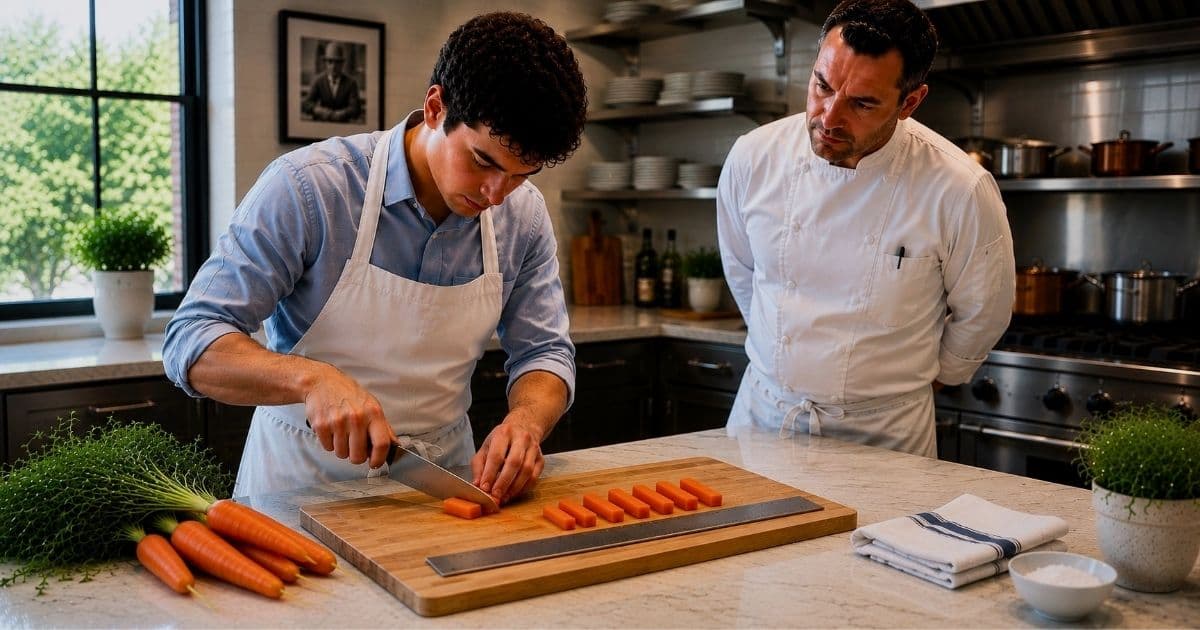
Identifying employee potential means looking beyond experience and technical skills. An Executive Chef's unusual carrot-cutting exercise reveals what to look for when promoting restaurant employees from within.
Mis en Place helps independent restaurants and hospitality businesses build stronger teams through recruiting and hiring tools created specifically for the industry.