
Identifying Employee Potential: Promoting From Within
by Sheldon | Jun 2, 2026
Identifying employee potential is one of the most important parts of promoting from within.

Leadership
by Sheldon | May 17, 2026 | 6 min read
Most restaurant employees decide whether leadership is effective based on repeated operational experiences, not titles or authority.
They notice it during pre-shift meetings, during difficult conversations, during busy service, and in moments when standards either remain consistent or are no longer enforced.
Repeated follow-through, reinforcement, accountability, and leadership behavior build strong restaurant teams over time.
BOH and FOH teams tend to trust leadership that consistently follows through, clearly reinforces expectations, functions effectively during service, and remains operationally steady under pressure.
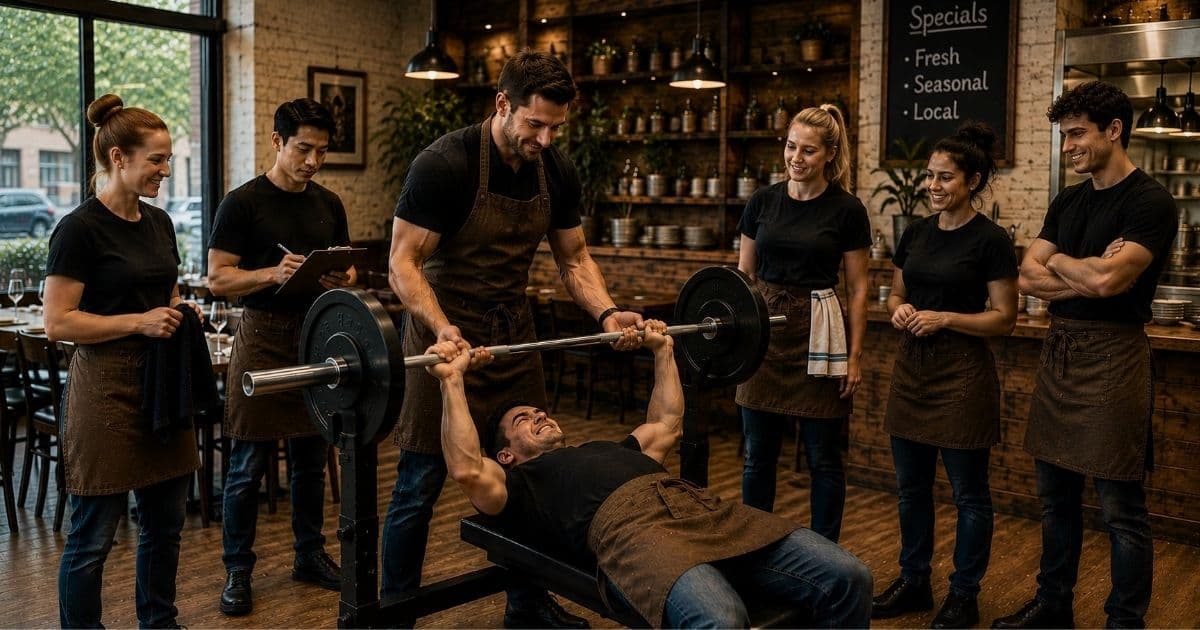
Strong restaurant leaders lead by example.
Managers who are comfortable both leading the team and being in the trenches with the team are usually more effective because employees trust leadership that stays connected to the realities of service.
What does restaurant management leadership look like in practice?
Support.
Strong leaders anticipate operational needs early, reinforce expectations consistently, and create and maintain environments where teams can execute confidently during service.
Strong restaurant management leadership includes:
Clear communication reinforced consistently
Follow-through after conversations and feedback
Operational awareness during service
Consistent standards between shifts and managers
Accountability applied fairly across the team
The ability to receive feedback without defensiveness
Calm decision-making under pressure
Reinforcement of expectations through daily operations
Strong restaurant teams trust leadership based on repeated operational behavior, not isolated conversations.
Communication does not end after managers give instructions once.
If you tell a child to brush their teeth and never follow up, there is a good chance it never happens.
Restaurant operations work similarly. If you rely on your host to keep the bathroom tidy during service and never follow up, guest complaints become much more likely.
How communication is delivered and received can directly affect service consistency, accountability, and team trust.
If a message is not getting through consistently, the communication itself may need to be adjusted.
Strong communication requires reinforcement, clarification, follow-through, and confirmation that expectations are actually being applied consistently afterward.
This becomes especially important in restaurants because information moves quickly during service.
Managers rotate between shifts, trainers explain tasks differently, and priorities change during busy periods.
Without reinforcement, employees eventually interpret standards based on whichever manager is running the shift instead of relying on consistent operational expectations.
That is where inconsistency starts.
For more on operational consistency and service expectations, read Restaurant Service Standards
Restaurant teams pay attention to what leadership repeatedly reinforces.
Not just what leadership says during meetings.
Managers sometimes address problems once and assume the issue is resolved.
However, when the same behavior goes unchecked afterward, employees stop treating the standard seriously.
Over time, inconsistent follow-through weakens operational trust.
As a result, teams start adjusting to individual manager preferences instead.
Strong restaurant management leadership reinforces expectations consistently across:
Service standards
Side-work completion
Guest interaction expectations
Communication between FOH and BOH
Accountability during difficult shifts
Team conduct under pressure
Consistency matters because restaurant teams notice operational contradictions quickly.
One ignored standard often creates several more.
A restaurant manager reminds the FOH team during pre-shift that bottled water should always be offered to seated guests.
This is a common missed opportunity to upsell.
Often, a server approaches the table and immediately pours filtered or tap water before offering bottled water.
The reminder lasts less than a minute.
During service, several tables are still automatically greeted with filtered or tap water.
Nothing is said afterward.
The next day, the same issue happens again.
Eventually, the team stops treating the expectation as an operational standard because leadership stops consistently reinforcing it.
A few weeks later, another manager handles the situation differently.
Instead of repeating the reminder every shift, they reinforce the expectation during service.
When bottled water is not offered initially, they address it immediately and consistently with the team member responsible.
They also explain why timing matters to service flow, guest pacing, and check average.
Over time, the behavior changes.
Not because the team heard the expectation for the first time.
Because leadership consistently reinforced it operationally afterward.
That is how restaurant management leadership earns their team’s operational trust.
Restaurant teams trust managers who stay connected to the realities of service.
This does not mean managers must perform every role themselves.
Instead, leadership should understand workflow, pressure points, timing, staffing limitations, and operational pacing well enough to lead credibly during real service conditions.
Teams notice when managers:
Step in calmly, displaying grace under pressure
Communicate clearly during busy moments
Support execution instead of creating confusion
Recognize operational bottlenecks early
Reinforce standards without slowing the operation down
Operational awareness strengthens communication credibility because employees trust direction more when leadership understands the environment where the work is happening.
Restaurant management leadership becomes weaker when managers rely entirely on authority while losing operational connection to the floor or kitchen.
Communication only works when information moves in both directions.
Managers who cannot receive feedback create communication blind spots across the operation.
Restaurant employees often recognize operational problems before leadership does because they experience service friction repeatedly throughout the shift.
Strong leaders create environments where:
Questions are welcome
Clarification is encouraged
Employees can identify operational problems safely
Feedback improves execution instead of creating defensiveness
This does not mean every employee complaint should immediately change operations.
However, leadership should remain open to identifying patterns that affect consistency, morale, service quality, or workflow.
Teams communicate more openly when they believe leadership will respond constructively instead of react emotionally.
For more on communication consistency inside restaurant operations, read When Restaurant Employees Stop Asking Questions
Repeated consistency over time builds operational trust in restaurant management leadership.
Teams watch:
Whether expectations stay stable
Whether accountability applies fairly
Whether communication changes daily behavior
Whether managers remain steady under pressure
Whether standards shift between leaders or shifts
Employees adapt quickly to inconsistent leadership.
Strong employees often temporarily compensate for weak systems.
But over time, operational inconsistency creates confusion, frustration, and disengagement across teams.
Strong restaurant leaders reduce operational uncertainty.
Consistent reinforcement keeps expectations clear across the operation.
Effective managers follow through after conversations instead of assuming standards will maintain themselves.
Teams execute more confidently during service when leadership consistently reinforces expectations.
That consistency becomes operational trust.
Restaurant management leadership is built through consistency and follow-through
Communication in restaurants is a process, not a single conversation
Teams trust reinforcement more than authority alone
Operational awareness strengthens leadership credibility
Strong leadership requires both giving and receiving feedback well
Restaurant teams mirror the consistency leadership reinforces operationally
Effective restaurant management leadership is built through consistency, communication, follow-through, operational awareness, and accountability that remains stable between shifts and managers.
Follow-through reinforces expectations operationally. Teams stop taking standards seriously when leadership addresses issues once but fails to reinforce them consistently afterward.
Operational trust often weakens when communication becomes inconsistent, accountability changes between managers, standards shift frequently, or leadership loses connection to daily operations.
Communication helps align expectations, reinforce standards, improve accountability, and reduce operational confusion during service. Strong communication also requires receiving feedback effectively.
Strong restaurant managers build trust through consistency, calm leadership during pressure, fair accountability, operational awareness, and communication that consistently translates into action.
Strong restaurant management leadership creates operational consistency long before teams describe it as leadership.
It becomes visible through repeated daily behavior, communication, reinforcement, and follow-through across the operation.
If your restaurant is working to improve consistency, communication, and long-term team stability, learn more about restaurant recruiting services and the restaurant hiring intake form.
Written by Sheldon
by Sheldon | Jun 2, 2026
Identifying employee potential is one of the most important parts of promoting from within.

by Sheldon | May 26, 2026
Restaurant management structure helps restaurants operate more effectively when support and structure work together.
by Sheldon | Apr 26, 2026
Restaurant manager accountability often starts with the conversations leaders delay.
Mis en Place helps independent restaurants and hospitality businesses build stronger teams through recruiting and hiring tools created specifically for the industry.