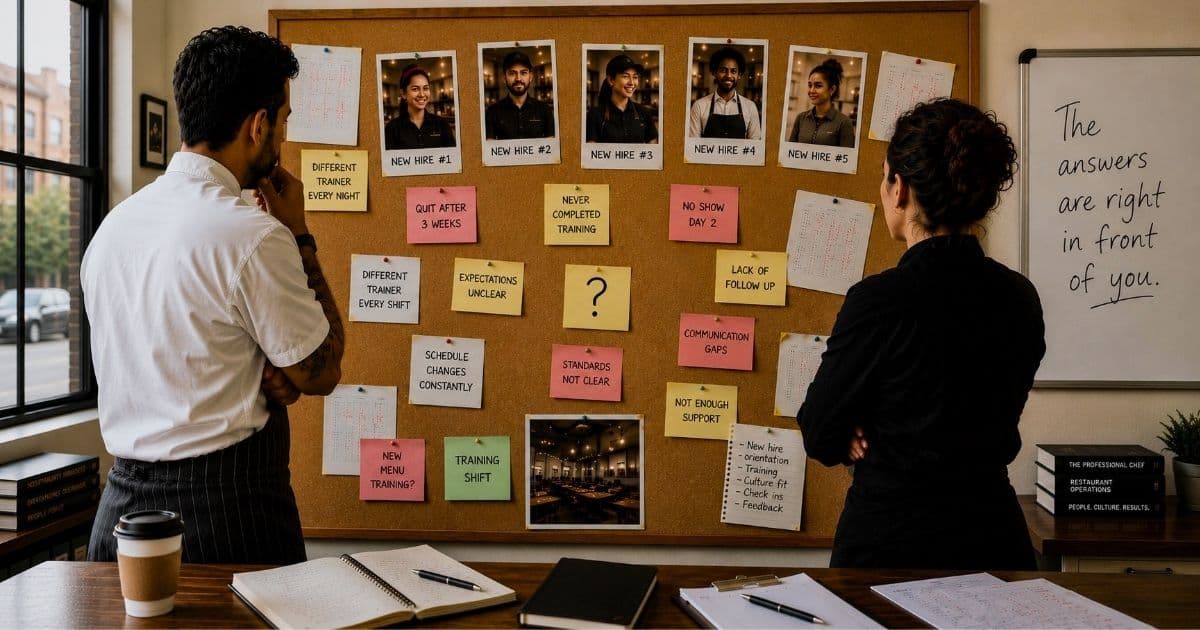
Restaurant Signing Bonuses During the 2021 Reopening
Restaurant signing bonuses became a common hiring tactic as restaurants reopened and operators moved quickly to rebuild teams. In many markets, signing bonuses increased applicant flow and sped up decisions during a volatile hiring window.
Most coverage from that period focused on why signing bonuses increased. What was less clear was whether they actually improved hiring outcomes for operators.
Quick Guide
Restaurant signing bonuses helped restaurants attract attention quickly during the labor shortage. They created urgency and gave candidates a reason to engage in a crowded hiring market.
In practice, these incentives worked best as a short-term lever. They supported hiring momentum, but they did not solve retention, training, or operational clarity.
Operators who paired incentives with structure, scheduling consistency, and clear expectations saw stronger outcomes than those relying on pay incentives alone.
Restaurant Signing Bonuses in Context
The rise in hiring bonuses during the 2021 reopening reflected a clear imbalance. Demand for labor returned quickly, while the available workforce recovered more slowly.
National coverage captured these challenges during the 2021 reopening, including reporting in The Wall Street Journal on staffing shortages affecting restaurants and hotels.
Similar hiring pressures were documented in reporting by The Washington Post and the Financial Times.
These reports reinforce the same pattern: compensation moved faster than operational systems.
What Hiring Incentives Actually Changed
In practice, these incentives influenced behavior at the top of the funnel. More candidates applied. More candidates responded quickly.
However, they did not meaningfully improve:
Retention after 30 to 60 days
Training quality or onboarding consistency
Daily working conditions
Manager communication and structure
As a result, many operators found themselves repeatedly using bonus incentives just to maintain baseline staffing levels.
Why Hiring Incentives Matter for Operators
These incentives created a useful signal for operators. They highlighted how sensitive hiring outcomes are to clarity, speed, and positioning.
Ultimately, candidates responded not only to pay, but to:
When these elements were missing, hiring bonuses functioned as a temporary patch rather than a solution.
Key Components Behind Effective Restaurant Hiring
The reopening period revealed several components that consistently improved hiring outcomes:
Defined roles and responsibilities
Predictable scheduling practices
Clear communication from leadership
Balanced workload expectations
In practice, these same elements are outlined in our Structured Hiring Process for Restaurants, which emphasizes clear expectations, consistent communication, and a more organized approach to restaurant hiring.
As a result, operators working from a defined structure saw more consistent hiring outcomes and stronger early retention.
Supporting information from 7shifts' restaurant labor cost guide explains how wages, bonuses, and other staffing expenses affect restaurant operating costs.
In addition, operator insights reflected in media coverage align with these findings. This includes the original Philadelphia Inquirer feature that sparked this discussion: Restaurants offer signing bonuses to new employees amid a labor shortage
How to Use Signing Bonuses Effectively
In practice, signing bonuses can still play a role when used deliberately.
Use them to:
Increase visibility in a competitive market
Accelerate decision-making for qualified candidates
Support a well-structured hiring process
Avoid using them to compensate for:
Unclear expectations
Inconsistent scheduling
Weak onboarding
As a result, the bonus supports a system that is already working.
Where Hiring Lacks Structure
The most common failure point is relying on incentives without operational alignment.
When hiring systems are unclear, these incentives attract candidates into an unstable environment. This leads to early exits, repeated hiring cycles, and rising costs.
In contrast, structured operations reduce reliance on incentives over time.
Long-Term Impact of Signing Bonuses
These incentives left a lasting impact on operator expectations around pay transparency, speed, and candidate experience.
Ultimately, the takeaway is simple. Incentives can open the door, but structure keeps people in the role.
Restaurant signing bonuses remain a useful tactic, but they are most effective when paired with clear systems, consistent communication, and predictable operations.