
What changed for line cooks during the labor shortage
Labor data continues to show rising pressure across hospitality, but this line cook survey provides clarity on what actually happened in kitchens. While headlines focused on a labor shortage, cooks experienced a deeper shift in expectations, structure, and day-to-day working conditions.
As a result, understanding the line cook survey helps operators move beyond assumptions and focus on what changed in practical terms.
Quick Guide
Line cooks left the industry primarily due to workload imbalance, inconsistent scheduling, and lack of operational structure. In practice, these conditions created instability in roles that were already physically and mentally demanding.
In addition, cooks began prioritizing predictability, communication, and respectful working environments over traditional industry norms.
Ultimately, the labor shortage reflected a reset in what cooks are willing to accept in kitchen roles.
Line cook survey insights on labor shortages
Early reporting focused on staffing gaps, but the survey reveals a broader shift in how cooks evaluate roles.
The data consistently points to three patterns:
- Pay did not match workload intensity
- Schedules lacked consistency and predictability
- Management structure often felt unclear or reactive
As a result, cooks began reassessing whether traditional kitchen environments were sustainable.
Why line cooks left the industry
The findings make it clear that leaving was not a single-factor decision. Instead, it reflected accumulated friction across daily operations.
Cooks reported:
- Long hours without clear structure
- High volume expectations without staffing support
- Limited communication from leadership
In practice, these conditions made roles feel unstable, even when compensation increased.
Why this shift matters for operators
This shift is not temporary. It reflects a change in how kitchen roles are evaluated.
As a result, operators who focus only on wages often see limited improvement in hiring outcomes.
In addition, cooks now assess roles based on:
- Clarity of expectations
- Consistency of scheduling
- Professional kitchen structure
Ultimately, hiring success depends on aligning these factors, not just increasing pay.
Key components revealed in the line cook survey
The findings highlight several components that now influence hiring outcomes:
- Defined roles and responsibilities
- Predictable scheduling practices
- Clear communication from leadership
- Balanced workload expectations
In addition, broader reporting supports these patterns across the industry.
Wall Street Journal restaurant labor shortage coverage
These same workforce shifts were reflected in national reporting, including insights contributed to
The Washington Post feature on restaurant labor shortages and the Financial Times coverage of hospitality workforce trends
Supporting data also reinforces the operational impact of labor changes.
7shifts restaurant labor cost insights
These conditions consistently appear in kitchens that attract and retain cooks.
How operators can respond to labor changes
Operators can respond effectively by focusing on structure rather than urgency.
In practice, this includes:
- Setting clear expectations before hiring
- Aligning pay with actual workload
- Establishing consistent scheduling systems
- Improving communication during service and onboarding
As a result, kitchens become more predictable and easier for cooks to commit to in the long term.
In addition, pairing structure with coordination improves hiring outcomes through structured hiring support for independent restaurants.
Where most hiring strategies fail
Many hiring strategies still rely on visibility alone.
However, the data shows that interest does not convert without structure.
Common failure points include:
- Posting roles without clear expectations
- Overpromising flexibility without systems to support it
- Relying on urgency instead of consistency
As a result, roles attract attention but fail to retain candidates.
The long-term impact of the line cook survey
The research reflects a lasting shift in the industry.
Cooks are not simply returning to previous expectations. Instead, they are choosing roles that provide stability, clarity, and professionalism.
Ultimately, this changes how hiring must be approached.
Operators who adapt to these expectations build stronger teams. Those who do not continue to face hiring challenges, regardless of wage increases.
Conclusion
The line cook survey makes one thing clear: the labor shortage was not just about availability. It was about alignment.
As a result, kitchens that provide structure, consistency, and clear expectations are better positioned to hire and retain cooks.
Ultimately, understanding what changed allows operators to move forward with more effective, sustainable hiring strategies.
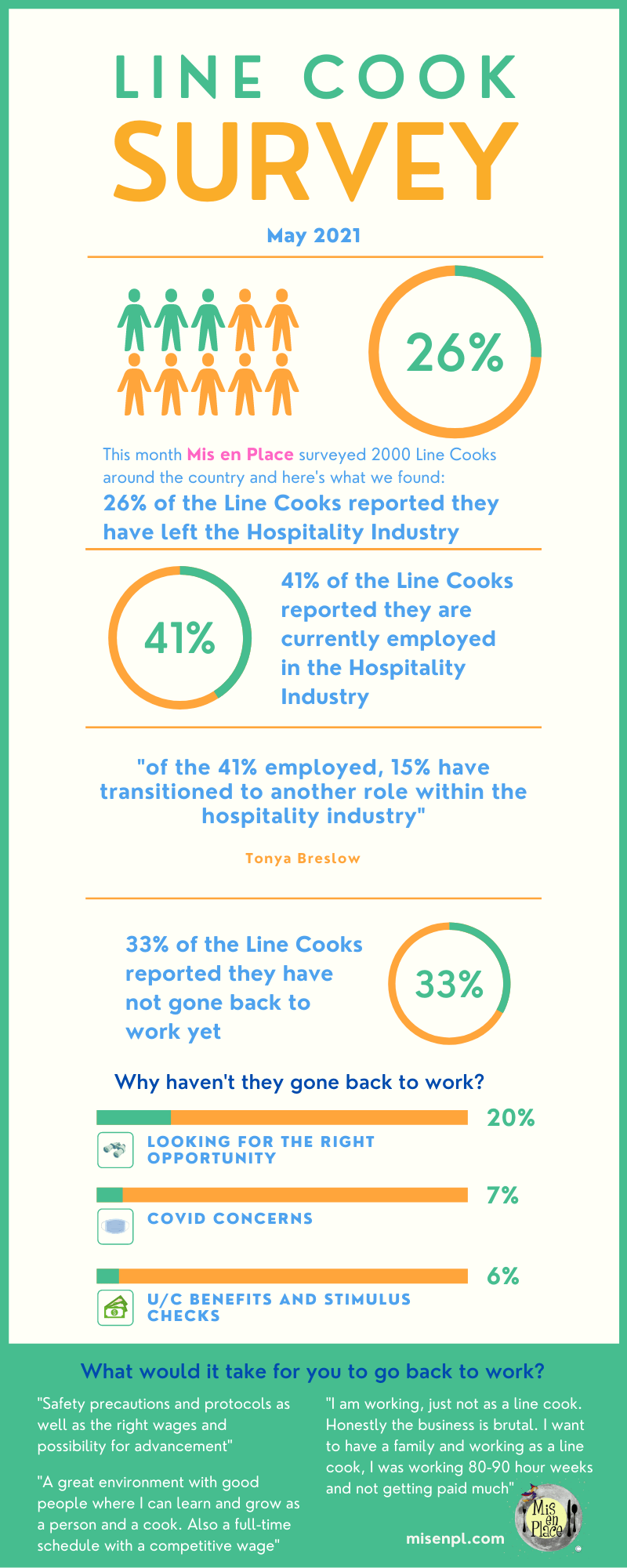
Mis en Place survey of 2,000 line cooks showing workforce shifts during the pandemic labor shortage.
Recent Comments