
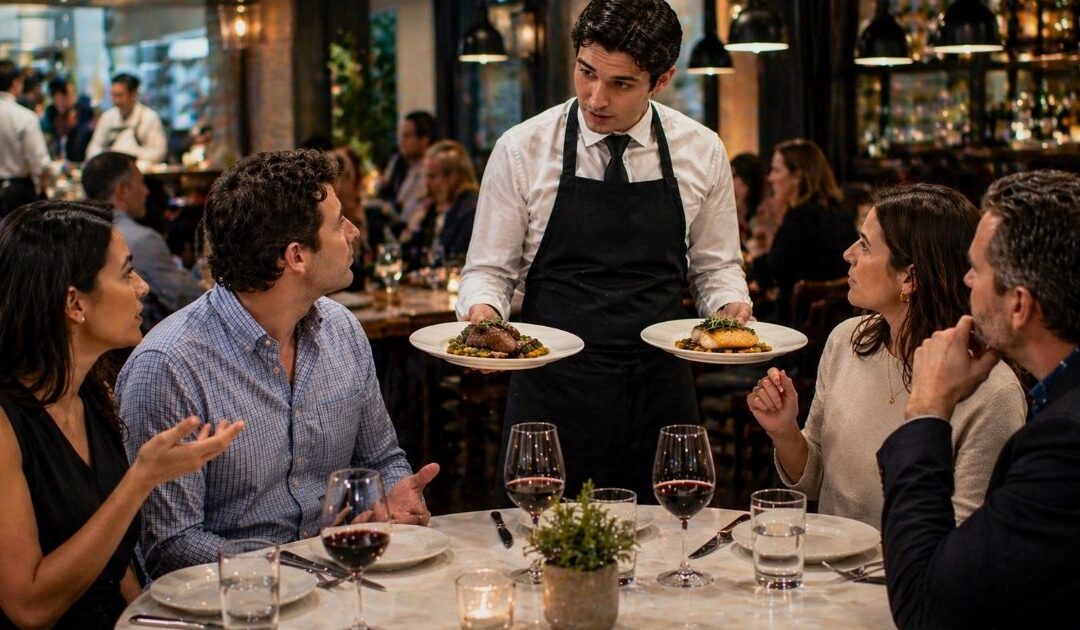
What Restaurant Standards Actually Look Like In Practice
Across the industry, operators can see the gap between strong service and inconsistent service more clearly, and restaurant standards sit at the center of that shift as teams navigate hiring, retention, and service consistency challenges highlighted by sources like restaurant workforce trends
Great service is like a stage performance.
It only works when everyone has rehearsed and knows their role.
In restaurants, that usually comes down to one thing.
Leaders teach and reinforce restaurant standards.
Or people piece it together in real time.
That kind of performance doesn’t get applause.
You can usually tell which one you’re walking into within the first few minutes.
Quick Guide: What Strong Restaurant Standards Look Like In Practice
Restaurant standards are not written policies. They shape how the operation runs.
Here is what that looks like in practice:
• As employees arrive, they greet each other directly
• Managers check uniforms and mise en place FOH: clean apron, wine key, click pens | BOH: knives, non-slip shoes
• Pre-service includes tasting and alignment, not just menu recitation or notes
• The staff uses consistent service language
• The staff describes dishes the same way, regardless of who presents them
• Managers handle the same issue the same way
When these are in place, the work feels clear.
Without them, people start making their own decisions about how things should be done.
Teaching and Reinforcing Restaurant Standards
This is where restaurant standards become real. If you want to see how this connects to building consistency from day one, read Restaurant Training Systems: How to Build Consistency From Day One
Front of house:
• Managers show servers how to guide a guest through the menu and describe dishes in a consistent way
• Wine stewards present wine the same way every time, from introducing the bottle to returning to check on it
• Servers greet guests within a consistent window instead of leaving it to chance
• Pre-service includes short tastings where someone explains the dish and how to talk about it with a guest
Back of house:
• Cooks set stations the same way each day, so anyone stepping in knows exactly where everything lives
• Kitchen leaders organize prep lists in a consistent format with clear priorities
• Expediters call tickets using the same language, so no one loses time to confusion
• The kitchen maintains a predictable flow, regardless of who works a station
Training:
• A new hire spends the first few days learning a defined sequence instead of jumping between tasks
• Trainers explain the work instead of relying on observation alone
• Managers give feedback the same way, so expectations stay consistent
This is what rehearsal looks like in a restaurant.
It is also what mise en place looks like when a team does it well.
What It Looks Like When People Figure It Out In Real Time
This is less obvious, but easy to recognize once you’ve seen it.
Front of house:
• One server describes a dish one way, another leaves out key details, and a third adds their own version
• A guest asks two questions about a menu item and gets two different answers depending on who responds
• A new hire gets corrected mid-service for something no one explained beforehand
Back of house:
• Different cooks set stations in different ways, so the next person has to relearn the setup
• Prep priorities change daily, with no clear structure behind what gets done first
• Different people call tickets in different ways, which creates hesitation instead of flow
Management:
• One manager emphasizes speed, another focuses on detail, and a third changes direction in the moment
• Managers react after something goes wrong instead of setting the standard ahead of time
None of these stand out on their own.
Together, they create constant friction.
Where Candidates Notice Restaurant Standards First
Candidates usually recognize this early.
Within the first few days:
• Training either happens before service or in the middle of it
• Answers either stay consistent or vary depending on who responds
• The team either feels aligned or slightly off
If most learning happens through correction, the team has not fully built the standards yet.
If expectations change depending on who is speaking, leadership has not clearly defined them.
These patterns tend to continue.
Why Restaurant Standards Matter Beyond The Job
Restaurant standards do more than create consistency.
They define the work itself.
When standards are clear:
• The role is easier to understand
• Leaders can measure performance more clearly
• The team operates with more confidence
Without them, the job becomes a series of disconnected tasks.
What Hospitality Actually Looks Like
People often describe hospitality as warm and welcoming, and industry voices, including what makes great service, point to the care and attention guests remember.
In practice, teams create hospitality through how they define and execute their work.
I was recruiting for a quick-service fried chicken and donut concept and spent time observing the counter.
One person didn’t just answer a question about the donuts. They said, “Do you want to try the strawberry? It’s new.”
It felt natural. Not scripted, but not random either.
That kind of interaction comes from knowing the product and feeling comfortable talking about it.
I was at a restaurant I frequent and couldn’t decide between two dishes. I picked one, but not with much confidence.
My server noticed, mentioned it to the kitchen, and both dishes came out.
Nothing was said about it. It just happened.
That kind of decision usually isn’t made alone.
A guest feels welcome when:
• Someone greets them in a consistent and timely way
• Someone answers their questions clearly
• The experience feels intentional from start to finish
Without that, even well-meaning teams struggle to create a consistent experience.
Hospitality is not just how one person acts.
It is how the team operates together.
From Paycheck To Profession
A paycheck covers time and work. It does not define the role.
What changes the experience is whether the work has structure and meaning.
Standards define how the work gets done.
Reinforcement creates consistency.
Shared understanding builds momentum.
That is what allows someone to grow in the role.
Without that, the job stays transactional.
Where Strong Restaurant Standards Come From
Restaurant standards do not hold on their own without clear ownership.
Leaders create them through alignment between hiring, training, and daily operations.
This is the context in which strong hiring decisions are made.
If you want to see how that is built into a process, start here:
Restaurant Recruiting Services
Final Thought
You can tell when a restaurant is running like a performance.
The team is aligned. The experience feels intentional. The work flows.
That doesn’t happen in the moment.
It comes from mise en place.
Recent Comments