
How Mise en Place Applies to Restaurant Hiring
Mise en place hiring starts with preparation. In restaurant operations, mise en place is the foundation of consistency. The same principle applies to hiring.
Stations get set. Prep gets finished. Roles remain clear, while expectations stay aligned.
Because service depends on preparation, teams move fast without cutting corners.
Hiring works the same way.
However, many teams extend offers before they have everything in place and assume momentum will carry the hire to day one.
Hope is not a hiring strategy.
Strong hires help, of course. Still, they cannot compensate for chaos.
Talent performs best when structure is already in place. So, if you want consistency, build the system first.
Service Begins with Mise en Place in Restaurant Hiring
When hiring feels chaotic, it rarely comes down to talent alone.
More often, teams prepare after the offer instead of before it. As a result, confusion defines the first week instead of trust.
Preparation is not perfection. It is respect.
It is disciplined. This signals:
• We are prepared for you
• We have thought this through
• You will not be left guessing
Clarity builds confidence. Then confidence builds commitment. And commitment shows up.
Service begins with mise en place. Hiring should too.
Service Begins with Mise en Place in Hiring
Hiring mise en place is not complicated. It requires discipline.
Before day one, run a quick readiness check.
Start with Ownership
First, make ownership clear.
Who is responsible for this person’s first week? Not “everyone.” One person.
That point person sets the tone, answers questions, and closes gaps early. As a result, the new hire feels supported before they ever clock in.
Define Success Early
Next, define expectations.
Does the new hire know what success looks like in week one? Do they know what “good” looks like on shift one?
When you name the standard, you remove guessing. In addition, you reduce the fear of walking into a moving target.
Confirm Logistics in Writing
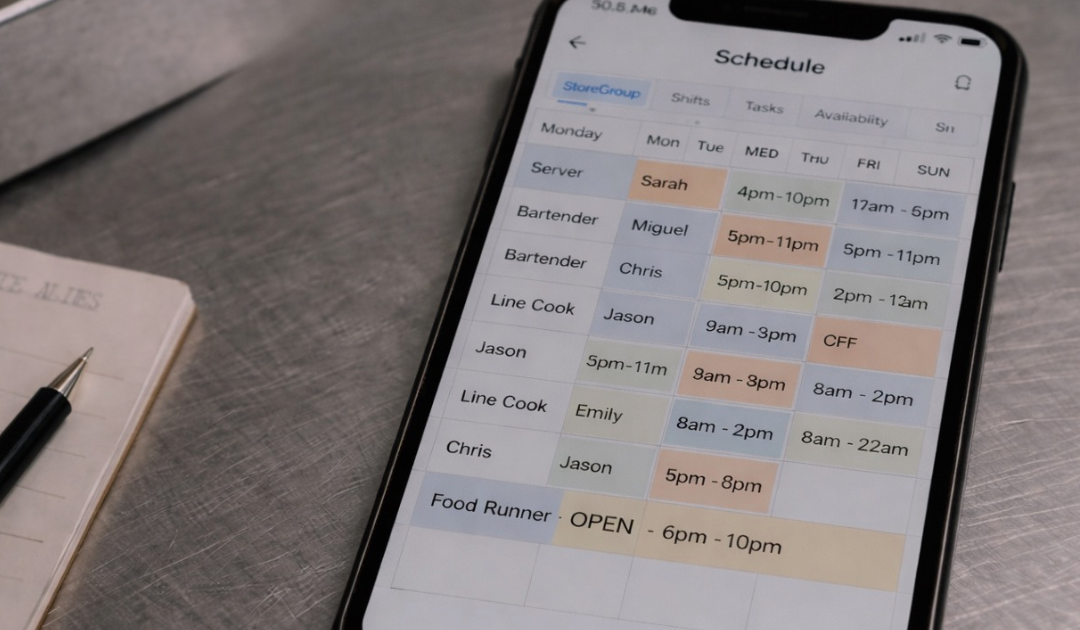
Then, confirm the basics in writing:
• Start time
• Uniform
• Parking
• Schedule
• Contact person
Even small details matter because small friction creates big doubt. So, make arrival simple.
Clarify Compensation Honestly
After that, get specific about pay.
Do not assume. Do not imply. Make sure both sides understand the offer clearly.
If something feels unclear, address it now. Otherwise, uncertainty grows quietly.
Build Feedback in Early
Finally, schedule short check-ins early.
A quick touchpoint in the first week catches small issues before they become larger ones. More importantly, it signals that feedback goes both ways.
If these elements stay vague, the process is not ready, even if the offer is out. That quiet work decides whether momentum builds or breaks.
Service Begins with Mise en Place in Restaurant Staffing
Many of the hiring challenges operators face today are not just about labor shortages. They often result from unclear roles, inconsistent processes, and reactive decisions.
As restaurant staffing challenges evolve, operators who build consistent hiring systems position themselves to attract and retain strong team members.
You can read more about how these issues connect to broader hiring challenges in our guide to restaurant staffing challenges in today’s hiring market
For a broader context on labor market conditions, see NPR coverage of restaurant labor shortages
Recent Comments